TL;DR
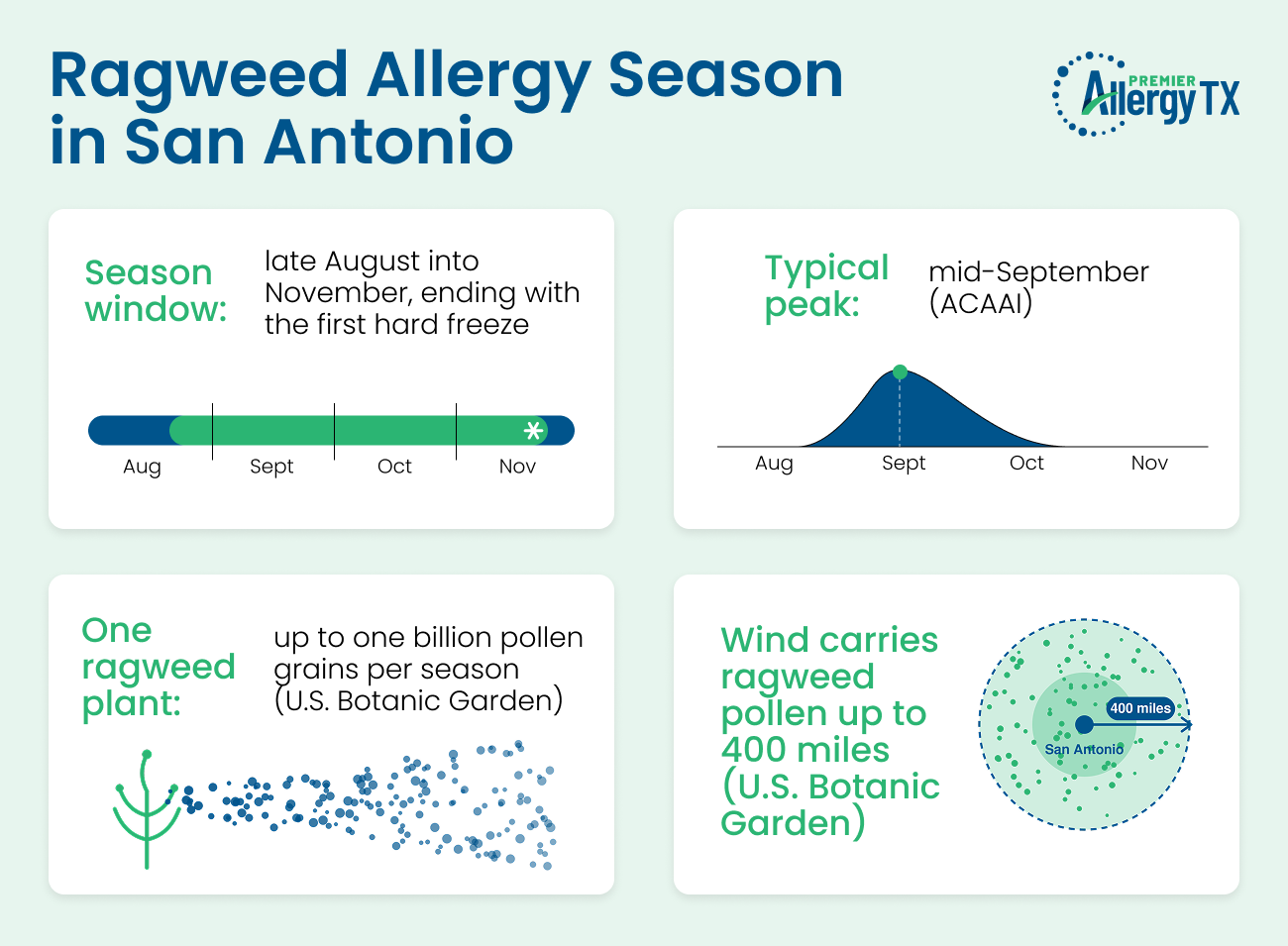
- Ragweed allergy symptoms in San Antonio usually start in late August and continue until the first hard freeze, which here often means November. Pollen counts generally peak around mid-September.
- Duration and itch separate ragweed from a virus. A cold runs its course in about a week. Pollen symptoms last as long as the pollen does.
- Ragweed shares our fall with mold spores from damp leaf litter, other weeds, and the indoor allergens that build up once the windows close.
- Skin testing or an allergen-specific IgE blood test identifies what you react to, and that result forms the basis of an immunotherapy plan.
- Ragweed immunotherapy is designed to begin months before the season, so you make the decision that shapes next fall in early summer.
Introduction
September and October are the months our San Antonio patients wait for all year. The mornings finally cool off, the Hill Country opens up, high school football starts, and everyone wants to be outside again. But it is also the stretch when our front desk starts hearing about sneezing that will not settle down.
Ragweed allergy symptoms
in San Antonio usually mean sneezing, nasal congestion, and itchy, watery eyes, and they begin in late August and continue until a hard freeze, which in South Texas often arrives in November. If your symptoms have persisted for more than a week and you have itchy eyes and a runny nose, it is time to get tested to determine the exact cause.
If you have already been tested and you are deciding on the next line of action,
What Is Ragweed and Why Does It Cause Allergies?
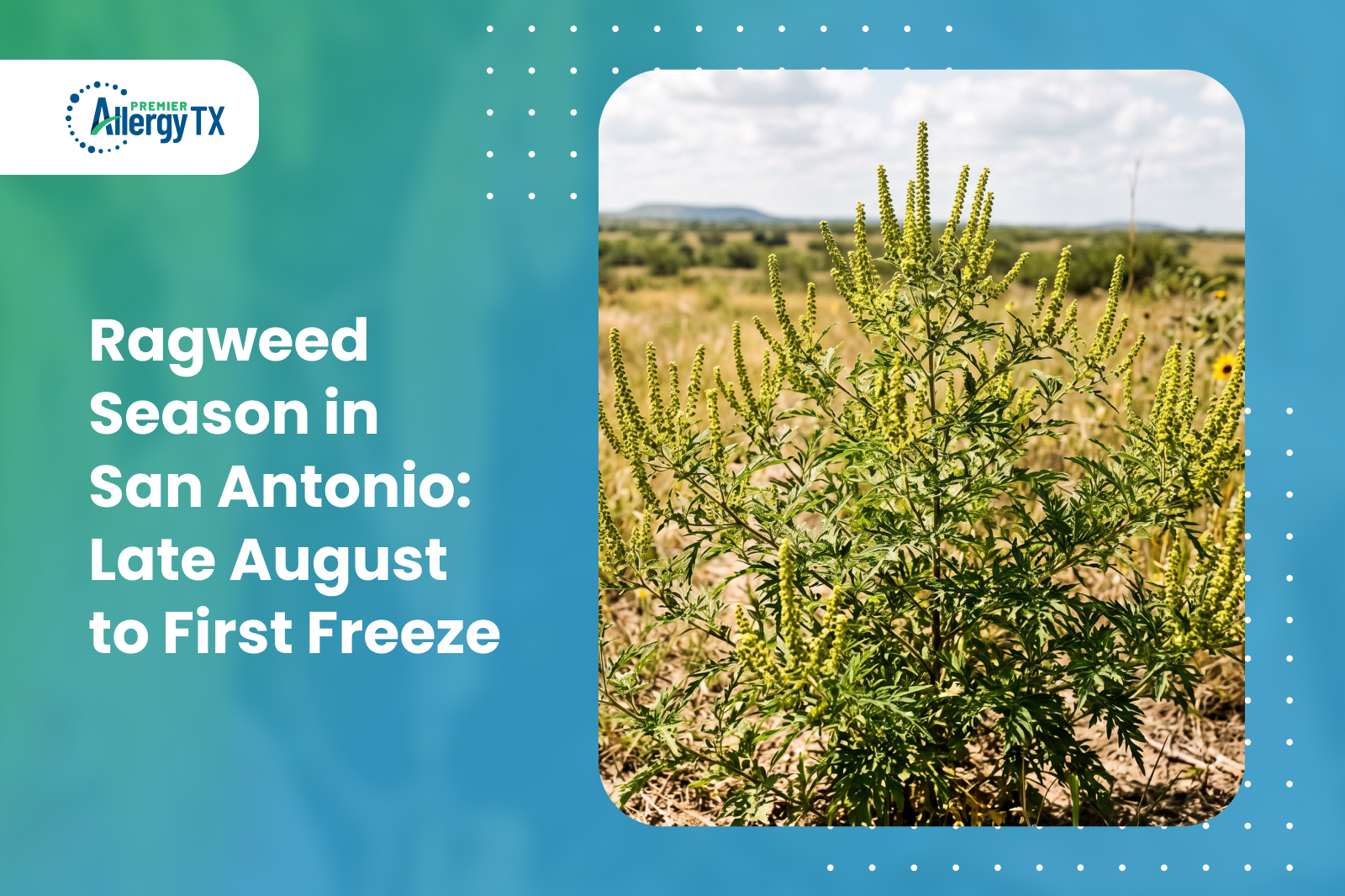
Ragweed is a weedy flowering plant that releases lightweight pollen into the air in late summer and fall, which can trigger an allergic reaction in some people. It does not need insects to reproduce, so it produces enormous quantities and lets the wind do the work.
The volume is what makes it hard to avoid. A single plant can release
one billion grains in a season, and the wind carries that pollen up to 400 miles from where it grew.
In daily life, that 400-mile radius is much smaller. Most of the pollen on a Tuesday morning near Alamo Ranch grew within a few miles, along a fence line, a drainage easement, or the edge of a cleared lot. Ragweed favors disturbed ground, which is why we ask patients about any new construction near their home or the office.
When Is Ragweed Season in San Antonio?
Ragweed prospers the most from late August in most years, with counts climbing through September and peaking until the first frost kills the plants. The
ACAAI places the national bloom from August to November, peaking around mid-September, and the
AAFA describes a season lasting roughly six to ten weeks, depending on location.
South Texas sits at the long end of that range. Our first hard freeze arrives late, and ragweed pollen in San Antonio keeps coming until it does. A mild winter extends the season, which is one reason our patients report such different experiences from year to year.
Ragweed season in San Antonio is also only one chapter. Cedar takes the winter, oak and elm take the spring, and Bermuda grass takes the summer, which our guide to
Texas allergy season walks through month by month.
Common Ragweed Allergy Symptoms
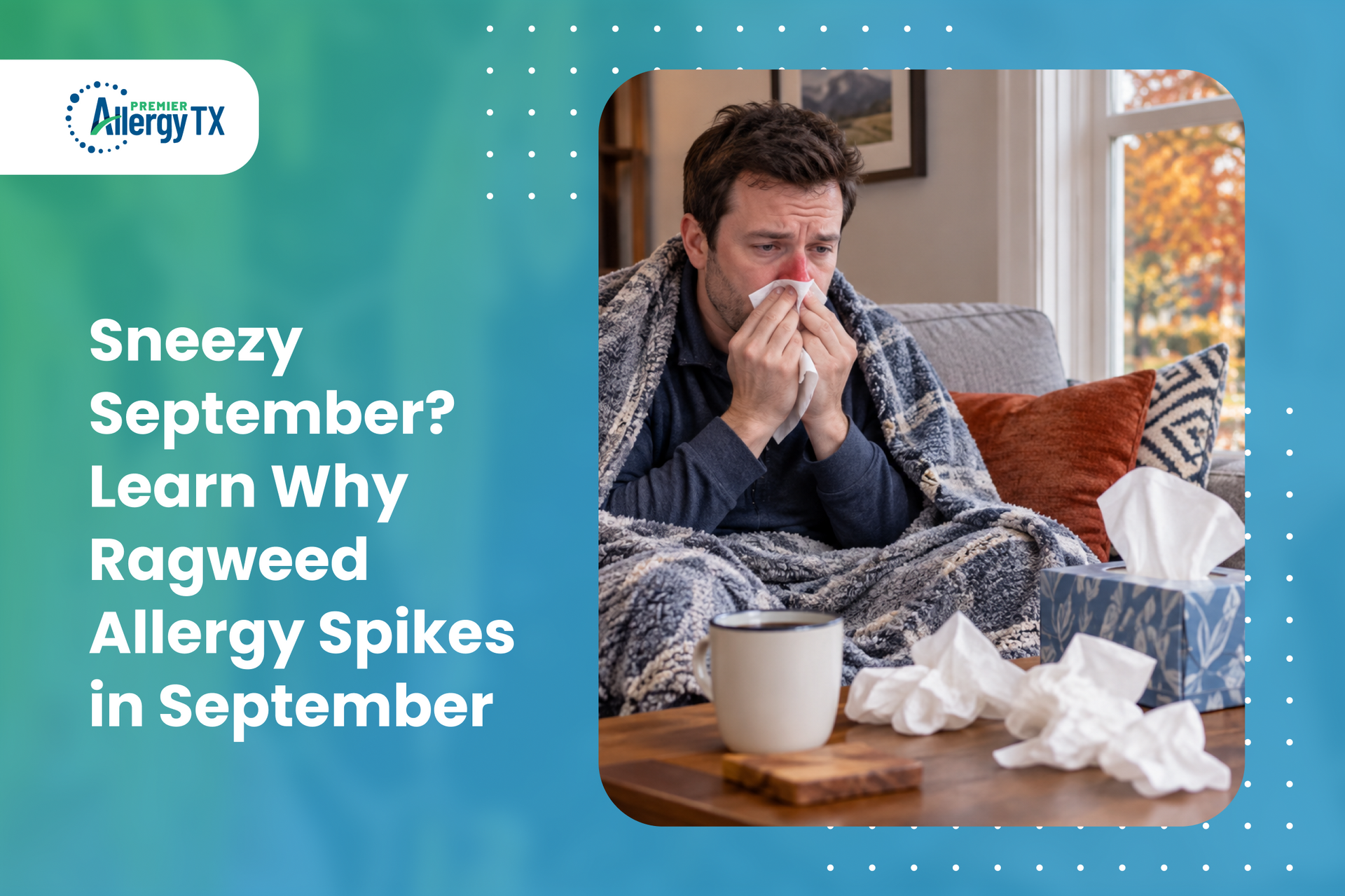
Ragweed allergy symptoms are nasal and ocular for most people, and they track the pollen count. What we hear described most often in the fall is
- Sneezing in runs, worst in the morning
- Nasal congestion and clear, watery drainage
- Itchy, watery, reddened eyes
- Itching in the roof of the mouth, the throat, or the ear canals
- Postnasal drip and a cough that lingers at night
- Fatigue
Fall pollen can aggravate asthma, and you should take that seriously. Symptoms include nighttime coughing, chest tightness, shortness of breath, and congestion. We covered how the two conditions interact in the context of
ragweed and asthma.
The second is an itchy mouth from raw fruit.
Pollen-food syndrome occurs when proteins in certain raw foods resemble pollen proteins that the immune system already reacts to, and the ACAAI lists banana, cucumber, melons, sunflower seeds, and zucchini among the ragweed cross-reactors.
Every Labor Day, we receive at least one patient who raises this with us: cantaloupe at a cookout made their mouth itch; they blamed the fruit and never connected it to the nasal symptoms that started the same week. Cooking usually breaks down the proteins involved, which is why raw zucchini causes trouble and roasted zucchini does not.
Ragweed Allergy Symptoms vs. a Cold: How Can You Tell the Difference?
Duration and itch are the two key factors that allergists ask about first. A cold usually resolves in about a week and often brings body aches, a sore throat, or a low fever, while ragweed symptoms persist for weeks, ease on rainy days, and itch in a way a virus rarely itches.
"I have had this cold for six weeks." is the single most common sentence we hear in October. Colds do not last six weeks.
Sinus pressure is another overlap worth naming. Weeks of allergic inflammation can leave the sinuses swollen and produce facial pain that feels like an infection.
Telling the two apart is more of a clinical question than a self-assessment one, and it should be left to a doctor.
What Other Fall Allergens Can Trigger Symptoms in San Antonio?
Mold spores, other weed pollens, and indoor allergens all share the fall with ragweed here, which is why two people with the same September complaint can have different test results. Fall allergies in San Antonio rarely have a single cause.
Mold spores
Living with ragweed allergy symptoms can be bothersome and can take the joy out of your life. But you do not have to live like that. Taking the right precautions during ragweed allergy season can significantly reduce your allergy symptoms.
Consult Premier Allergy Texas for allergy testing. Get yourself tested and receive the right treatment from our professionals.
Other weeds
The ACAAI also names cocklebur, lamb's quarters, pigweed, sagebrush, and Russian thistle among the fall weed pollen, several of which grow readily in South Texas.
Dust mites and pet dander
Once the windows close and the dogs stay inside, indoor exposure to pet dander and dust mites also increases.
Most of the time, symptoms from all these allergens overlap completely, which is why testing is necessary rather than guessing the allergen is affecting you.
How to Reduce Ragweed Allergy Exposure
Exposure reduction works best as a handful of habits repeated daily during the season, not a one-time project. None of it eliminates pollen, and we tell patients that plainly so they judge the measures fairly.
- Keep windows closed and run the air conditioning.
The
NIEHS advises keeping windows closed at home and in the car, and using air conditioning rather than window or attic fans.
- Shift outdoor time later in the day.
Ragweed counts run highest in the morning per the ACAAI, so an evening walk usually goes better than a sunrise one.
- Shower and change after yard work
Pollen rides in on hair, clothing, shoes, and the dog. Showering before bed keeps it off the pillow and mattresses.
- Upgrade the HVAC filter
The EPA recommends a furnace filter of at least
MERV 13, or the highest MERV rating your system accepts. A portable
HEPA filter captures 99.97% of particles 0.3 microns or larger, well within the range that traps intact pollen grains.
- Stay more cautious on windy, dry days
Those move far more pollen than still, humid ones.
Our
ragweed prep tips guide goes further into the household side of the season.
How Is Ragweed Allergy Diagnosed?
Doctors diagnose ragweed allergy with testing, usually a skin prick test using a panel of regional allergens or a blood test measuring allergen-specific IgE antibodies. A history alone can point toward ragweed, but it cannot confirm it.
Testing before treatment is vital because:
- South Texas fall has more than one suspect, so a plan built on assumptions can target the wrong allergen.
- Immunotherapy is built on the result. The FDA-approved ragweed tablet is indicated only for patients with ragweed allergy confirmed by a positive skin test or an IgE blood test, per the Ragwitek label.
Dr. John F. Freiler reviews your results and develops plans tailored to your household, work schedule, time spent outdoors, and overall lifestyle.
Ragweed Allergy Treatment Options
Ragweed allergy treatment falls into two groups: medications that manage symptoms during the season, and immunotherapy that changes how reactive the immune system is to ragweed over time. Most of our patients use both at some stage.
Symptom medications
Antihistamines, intranasal corticosteroids, and eye drops are some OTC meds that help. A question we field every October is why an antihistamine seems to weaken mid-season. In most cases, the medication does not change; rather, exposure increases. The counts in early September are a fraction of those at peak.
More often, we see patients who have quietly added a second over-the-counter product, then a third, without a doctor reviewing how the medications interact.
Please talk with your provider before changing anything you take, including the products that do not require a prescription.
Allergy shots for ragweed
Allergy shots introduce small, controlled amounts of the allergen via injection, starting with a build-up phase and then moving to a maintenance phase that continues for three to five years. They are given in the office with an observation period afterward.
For patients sensitized to several allergens at once, allergy shots for ragweed can carry the rest of the panel in the same plan.
Allergy drops and sublingual tablets
Allergy drops and tablets go under the tongue, which suits families whose schedule does not allow regular office visits and children who do not want to deal with needles.
Request an Appointment to talk through which treatment suits you best. Dr. Freiler will walk you through what each option asks of your calendar and your budget.
When Should You See an Allergist for Ragweed Allergies?
See an allergist when symptoms return in the same weeks each year, last longer than two weeks, disturb your sleep, involve your chest, or no longer respond well to over-the-counter medication. Those are the patterns that testing tends to resolve.
The fall you are having right now was largely settled in early summer, and the appointment that matters most is the one you make in a month when you feel fine.
The thing that puts San Antonio patients off track more than anything else is deciding to start treatment in late September, when symptoms peak. But by then, the effective window for that season has already closed.
Find Relief From Ragweed Allergies in San Antonio
Dr. John F. Freiler, at Premier Allergy Texas, treats ragweed allergy in San Antonio, as well as asthma, eye allergies, hay fever, sinusitis, and food allergies, and builds each plan around the patient's test results and daily routine.
Bring two things to a first visit: roughly when your symptoms started, and a list of everything you have tried, including over-the-counter products. That gives Dr. Freiler enough to decide whether testing is the right next step for you.
Request an Appointment or call (210) 764-6567.
Conclusion
Pull up a calendar and put a note on the last week of May. That is the month to ask us about ragweed immunotherapy if fall is usually hard for you to get through. Most people miss this window.
If you are reading this in September with a box of tissues next to you, the June appointment has passed, and the question is different: what can we put in place for the six weeks still ahead so you stay healthy this season?
Frequently Asked Questions
Can ragweed cause sinus infection symptoms?
Prolonged allergic inflammation can leave the sinuses swollen and produce facial pressure, congestion, and pain that feel like an infection. Because they are treated differently, a provider should make the distinction. Allergy symptoms usually involve itching and clear discharge, while infections more often cause fever and thicker discharge.
What is the difference between allergy drops and allergy shots?
Allergy shots are injections given in the office, with a build-up phase followed by maintenance over three to five years, and they can address several allergens at once. You take drops and tablets under the tongue, mostly at home after a supervised first dose. Insurance coverage differs substantially between the two.
How do I know if I need allergy testing?
Testing is worth discussing if symptoms return in the same season each year, last longer than a couple of weeks, or no longer respond well to over-the-counter medication. It is also the prerequisite for ragweed immunotherapy, which is indicated only for patients with a confirmed positive skin test or IgE blood test.
This article is educational and is not medical advice. Talk with a licensed provider about your own symptoms, medications, and treatment options.