In Texas, winter doesn’t give allergies a break. Instead of relief, many residents are met with relentless sneezing thanks to a uniquely Texan culprit: mountain cedar, also known as Ashe juniper. Its pollen is everywhere during peak season, and it has a reputation for triggering some of the most intense allergy symptoms in the state.
What makes it tricky is that many Texans confuse cedar allergy with the usual spring or fall seasonal allergies. Sneezing, itchy eyes, congestion—it all feels familiar, but the timing and intensity are different. Without understanding the difference, it’s easy to treat the wrong condition and wonder why relief seems just out of reach.
In this blog, we’ll show you how to tell mountain cedar apart from other seasonal allergens. By the end, you’ll know what’s most likely triggering your sneezes and how to manage them so winter in Texas feels a little easier.
Turn Winter Sniffles Into Breezy Days
What Are Seasonal Allergies?
Your usual seasonal sniffles are not limited to one time of year, especially in Texas.
Seasonal allergies happen when your immune system overreacts to pollen from trees, grasses, or weeds as they pollinate throughout the year. These tiny particles may be invisible to the naked eye, but they can cause very noticeable discomfort.
In Texas, seasonal allergies are prevalent because pollen seasons often overlap. As one allergen fades, another takes its place, making symptoms feel continuous rather than seasonal.
Typical seasonal allergy symptoms include:
- A runny or stuffy nose that doesn’t seem to clear
- Itchy, watery, or red eyes
- Frequent sneezing, especially in the morning
- Nasal congestion or sinus pressure
Meet Mountain Cedar: Texas’ Winter Allergy Culprit
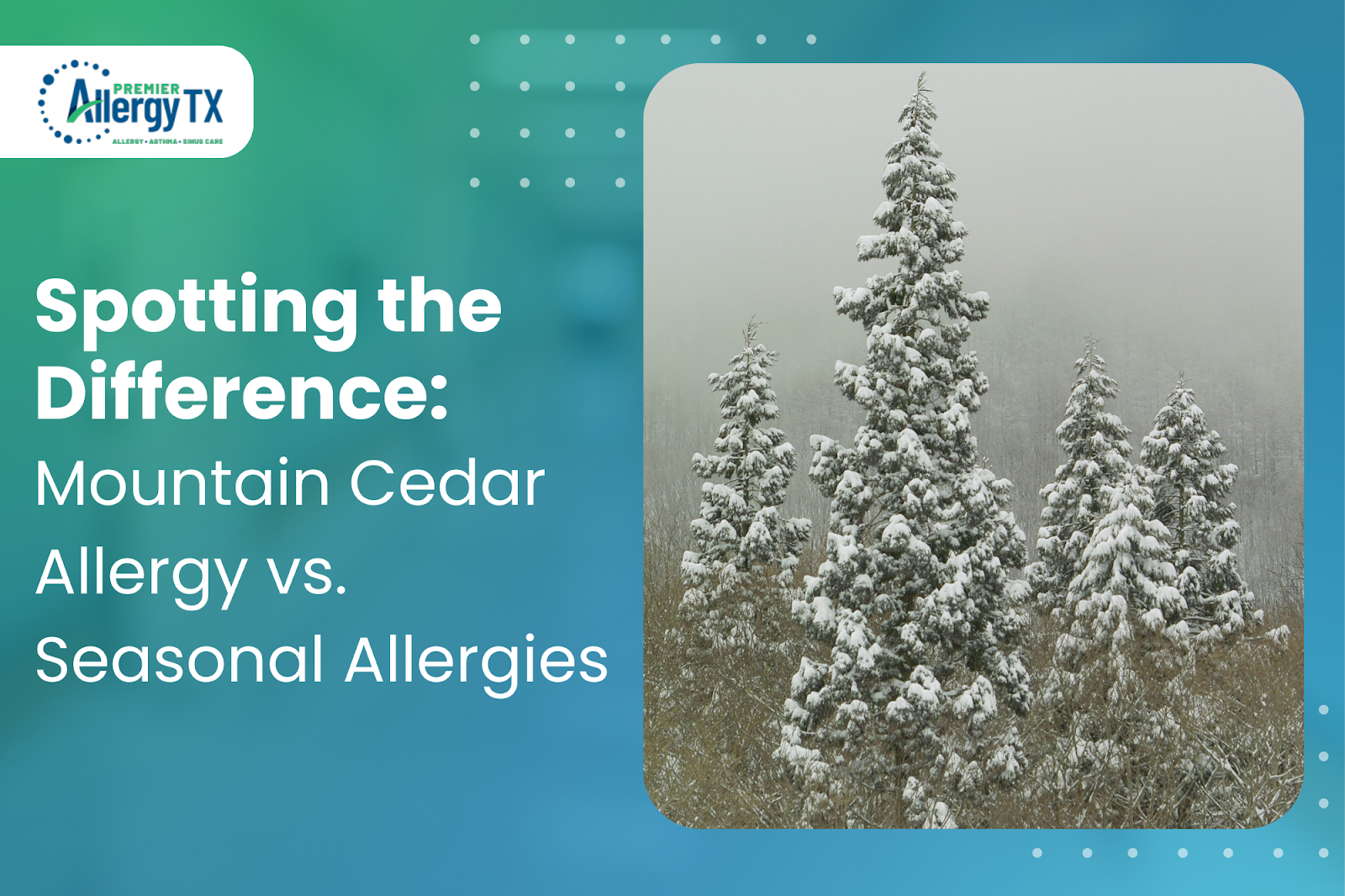
While seasonal allergies strike many times in a year, mountain cedar shows up when most Texans least expect it. Also known as Ashe juniper,
mountain cedar trees release pollen during winter, typically from December through February, making it a major cause of cold-weather sniffles.
Mountain cedar hits Texans hard because it grows widely across the state and produces extremely high pollen levels. Its lightweight pollen travels easily through the air, so even a short walk outside or hanging out in your own yard can trigger
cedar fever symptoms.
Common mountain cedar allergy symptoms include:
- Intense nasal congestion that feels hard to relieve
- Postnasal drip that leads to throat irritation or coughing
- Itchy, watery eyes
- Fatigue that lingers throughout the day
Spotting the Difference: Cedar vs. Other Seasonal Allergies
Understanding how mountain cedar allergies work helps you see how it differs from other seasonal allergies. Many symptoms overlap, but timing, triggers, and intensity can give you clues about what’s really causing your discomfort.
Here’s a quick side-by-side look at common seasonal allergens:
Timing is a major clue. If your symptoms flare in the middle of winter, cedar is likely the culprit. Spring and fall allergies usually align with local pollen counts and weather conditions, which can affect how severe symptoms can be.
One of the most effective ways to pinpoint your triggers is to keep a symptom diary. Note when sneezing, congestion, or itchy eyes appear, along with where you were or what you were doing. Over time, patterns emerge that make it easier to identify the allergen and manage symptoms effectively.
Diagnosis Matters: When to See an Allergist
Allergy symptoms like sneezing, congestion, and itchy eyes often look the same, so just guessing the cause can be frustrating.
Consulting an allergist can reveal the exact trigger and help you find real relief.
At Premier Allergy of Texas, we use trusted tests, including:
- Skin Prick Test:
Small doses of allergens are gently applied to the skin to test for reactions. Quick, safe, and results appear within minutes.
- Blood Test: Measures allergy-specific antibodies in your blood. Ideal for those who can’t undergo skin testing or want a broader view.
Knowing your triggers brings real benefits:
- Targeted treatment for your specific allergens
- Better symptom management with effective strategies
- Peace of mind knowing what to avoid
With professional allergy testing and personalized care, Premier Allergy of Texas helps you manage allergies effectively so you can enjoy every season without letting sneezes or congestion slow you down.
Treatment Options for Mountain Cedar and Other Allergies
Once you know your triggers, finding the right treatment can help you feel better fast. Mountain cedar and other seasonal allergies can be managed with quick relief, long-term solutions, and simple lifestyle changes.
Over-the-Counter Relief
For quick symptom relief, many people turn to over-the-counter options, such as:
- Antihistamines for a runny nose, sneezing, and itchy eyes
- Nasal sprays to ease congestion
- Eye drops for itchy, watery eyes
Immunotherapy for Long-Term Relief
If symptoms persist or are particularly bothersome, immunotherapy can provide lasting results:
- Allergy shots gradually expose your immune system to allergens, helping your body build tolerance.
- Sublingual tablets offer a needle-free alternative for certain allergens, taken at home under professional guidance.
Environmental Tips to Reduce Exposure
Small changes in daily habits can also go a long way:
- Use HEPA air filters indoors to capture pollen.
- Stay indoors during peak pollen times, usually early morning or on windy days.
- Wash your clothes, hands, and face after outdoor activities to remove pollen.
Every allergy is different, and treatments work best when tailored to your specific triggers. That’s why professional guidance from Premier Allergy of Texas is so important. With a customized plan, you can reduce symptoms, improve your quality of life, and finally enjoy the seasons without sneezing through them.
Live Your Best Life Despite Allergies
Allergies don’t have to control your winter or any season in Texas. By understanding the differences between mountain cedar and other seasonal allergies, tracking your symptoms, and choosing the right treatment, you can stay comfortable and enjoy your day-to-day without constant sneezing or congestion.
Premier Allergy of Texas makes it easy to take control of your allergies. Our local experts provide personalized testing and treatment in a comfortable, friendly environment. Book a consultation today and start breathing easier with care that’s tailored just for you.
Your Sneeze-Free Season Starts Here
Frequently Asked Questions
Can mountain cedar allergies trigger symptoms in people who don’t usually have allergies?
Yes! Mountain cedar pollen is extremely potent and widespread in Texas. Even people who have never experienced seasonal allergies can have a strong reaction during peak cedar season.
Are there natural remedies that actually help with mountain cedar symptoms?
Some people find relief from saline nasal rinses, local honey, or steam inhalation. While these methods may ease mild symptoms, they usually work best when combined with professional allergy care.
Does weather affect mountain cedar allergy severity?
Yes! Windy, dry days spread pollen more widely, increasing exposure. Rain can temporarily reduce airborne pollen levels, giving short-term relief.
Is mountain cedar allergy linked to other health issues?
While it doesn’t cause long-term disease, severe or chronic symptoms—like persistent sinus congestion—can affect sleep, energy levels, and quality of life if left unmanaged.