Summer in Texas means sunshine, barbecues, and bugs. While most of us just swat them away, for some people, a single insect bite or sting can turn into a serious allergic reaction. If you’ve ever wondered why your arm swells like a balloon after a mosquito bite or why a bee sting leaves you feeling awful, you might be dealing with an insect allergy. Research suggests that insect venom causes
82.7% of occupational anaphylaxis cases, with the most common triggers being yellow jackets, bees, and hornets.
Professions with the highest prevalence include beekeeping, outdoor work, food handling, and farming. In this guide, we’ll break down everything you need to know about insect bite allergy, insect sting allergy, symptoms, and the best ways to stay safe and comfortable, especially here in San Antonio and the surrounding areas.
What Are Insect Allergies?
An insect allergy occurs when your immune system overreacts to proteins found in an insect’s venom or saliva. Instead of treating the sting or bite as harmless, the body releases chemicals such as histamine, triggering allergic symptoms. This condition is commonly referred to as an allergy to insect bites and stings, and it can develop at any age, even after mild prior encounters.
Types of Insect Allergies
Not all creepy crawlies are created equal. When we talk about allergy to insect bites and stings, we usually split them into two camps:
1. Stinging Insects (The Usual Suspects)
- Honeybees
- Wasps
- Yellow jackets
- Hornets
- Fire ants (Texas, we’re looking at you)
These guys inject venom. And for someone with an insect sting allergy, that venom is like kryptonite.
2. Biting Insects (The Silent Offenders)
- Mosquitoes
- Fleas
- Bed bugs
- Certain flies
Biting insects don’t sting; they stab (politely). Their saliva contains proteins that can trigger an
insect bite allergy, ranging from angry welts to full-body reactions. At Premier Allergy & Asthma of Texas, we test for both. Whether you’re allergic to bees or bugs, you deserve answers.
What Causes Insect Allergies?
Insect allergy symptoms occur when the immune system mistakenly identifies insect proteins as harmful. The causes and risk factors include:
- Prior exposure:
Sensitization often happens after a previous bite or sting.
- Genetics:
Family history of allergies increases risk.
- Age:
Children and older adults may have more severe reactions.
- High exposure:
Outdoor work or living in areas with high insect activity raises risk.
What Are Insect Allergy Symptoms?
Recognizing
insect allergy symptoms early can mean the difference between managing a localized irritation at home and rushing to an emergency room. Symptoms typically present in three escalating tiers:
Normal Local Reactions
- Mild pain, swelling, and redness exactly at the injection site.
- An area of swelling smaller than 2 to 3 inches wide.
- Symptoms peak within a few hours and completely clear within a couple of days.
Large Local Reactions
This exaggerated form of an insect bite allergy symptoms suite involves:
- Severe redness and swelling that extends far beyond the initial site (for example, a sting on the forearm causing the entire arm to swell down to the wrist).
- Intense itching and throbbing pain that peaks over 48 hours and can last up to a week.
While alarming, a large local reaction is generally not systemic or life-threatening on its own.
Systemic Anaphylaxis (Medical Emergency)
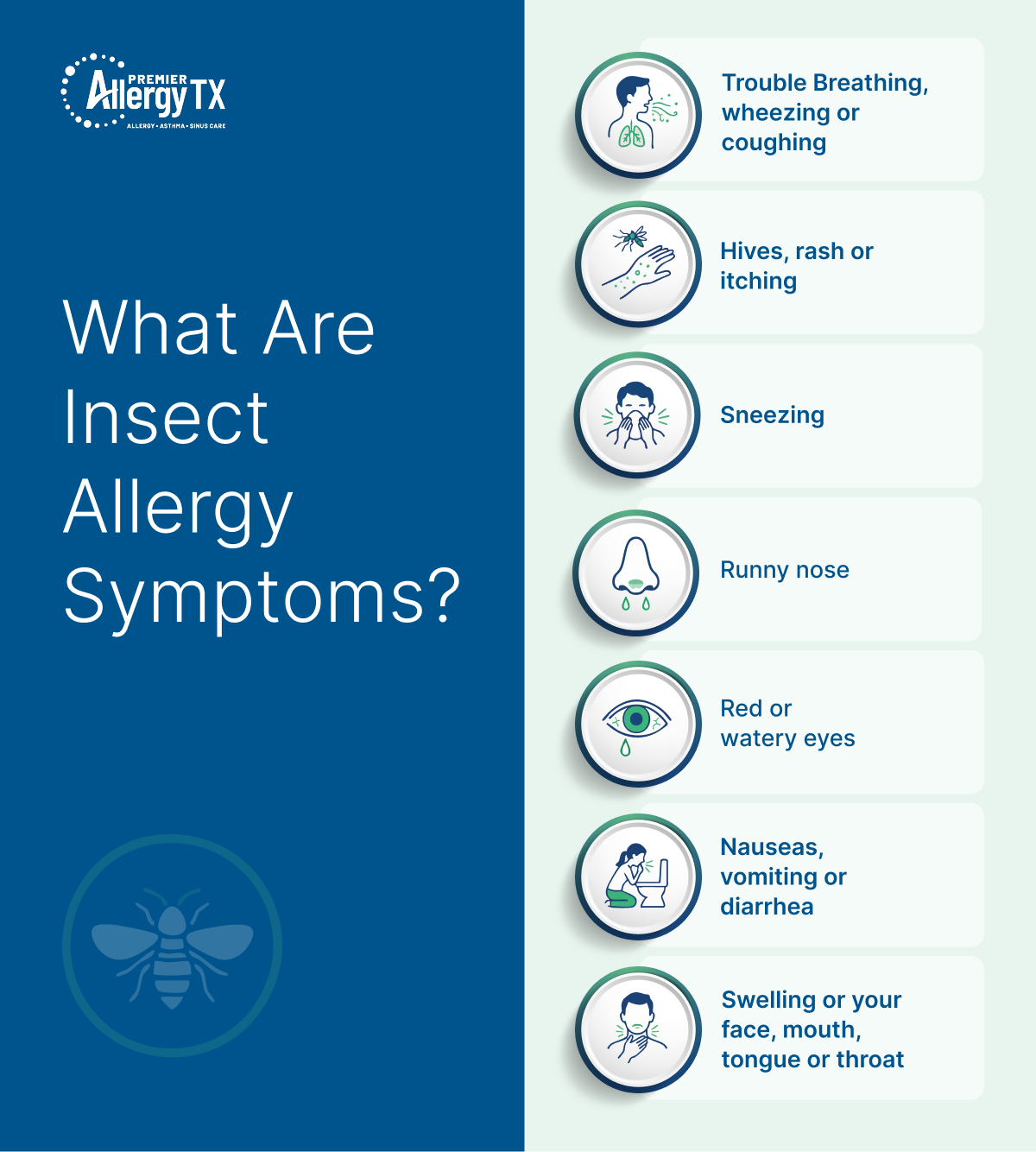
This is the most severe and dangerous presentation of insect allergy symptoms. Anaphylaxis is a full-body allergic reaction that can develop within minutes of an encounter. Watch for these critical warning signs:
- Respiratory: Hives, swelling of the tongue/throat, difficulty swallowing
- Cardiovascular: Dizziness, rapid drop in blood pressure, fainting, weak pulse
- Gastrointestinal: Nausea, abdominal cramps, vomiting
- Hives, flushing, or intense itching across areas of the body away from the sting.
- Swelling of the lips, tongue, or throat, causing difficulty swallowing or a hoarse voice.
- Shortness of breath, wheezing, or a persistent, tight cough.
- Dizziness, a sudden drop in blood pressure, fainting, or confusion.
- Nausea, vomiting, or severe abdominal cramps.
If you or someone near you exhibits any signs of anaphylaxis, administer an epinephrine auto-injector immediately and call 911.
What Are the Best Treatments for Insect Allergies?
The good news is that there are excellent insect bite allergy treatment options available:
Immediate Relief
- Antihistamines and topical corticosteroids
- Ice and elevation for swelling
- Pain relievers as needed
Long-Term Solutions
- Allergy Testing to identify specific triggers
- Allergy Shots (Immunotherapy) – the most effective way to build tolerance
- Emergency Action Plans with epinephrine auto-injectors
At
Premier Allergy of Texas, we create personalized treatment plans that fit your lifestyle and severity level. Whether it’s insect allergy testing or ongoing immunotherapy, our goal is to help you enjoy the outdoors with confidence again.
Why Patients Choose Premier Allergy of Texas
When it comes to managing insect allergy in San Antonio, patients seek care that is both specialized and personalized. Premier Allergy of Texas focuses on:
- Accurate diagnosis through advanced testing
- Customized treatment plans based on severity
- Access to immunotherapy for long-term relief
- Patient education for prevention and emergency readiness
Their approach ensures that patients not only treat symptoms but also reduce future risks
In A Nutshell
Living with an insect sting allergy or insect bite allergy doesn’t mean you have to stay indoors all summer. With the right knowledge, prevention strategies, and professional treatment, you can safely enjoy Texas outdoors. If insect allergies are making your life miserable, don’t wait until the next sting.
Schedule an appointment with Premier Allergy of Texas today.
Frequently Asked Questions
What is an insect allergy?
An insect allergy is an immune system reaction to proteins in insect venom or saliva, causing symptoms ranging from mild swelling to severe reactions.
How long does an insect bite allergy reaction last?
A typical local reaction clears up within 2 to 3 days. A large local reaction, characterized by extensive swelling and redness, can take anywhere from 5 to 10 days to resolve completely.
Can you develop an insect allergy later in life?
Absolutely. Many adults develop their first severe reaction after years of normal stings. Age, repeated exposure, and immune changes all play a role.
What are the common symptoms of an insect bite allergy?
Common insect bite allergy symptoms include redness, swelling, itching, and, in severe cases, hives, difficulty breathing, or swelling of the face and throat.