TL;DR
- Most holiday flare-ups we see at our San Antonio clinic start indoors, with dust and mold that come in on decorations pulled from storage.
- Mountain cedar pollen begins moving through Texas in late November, adding cedar season to holiday travel and houseguests.
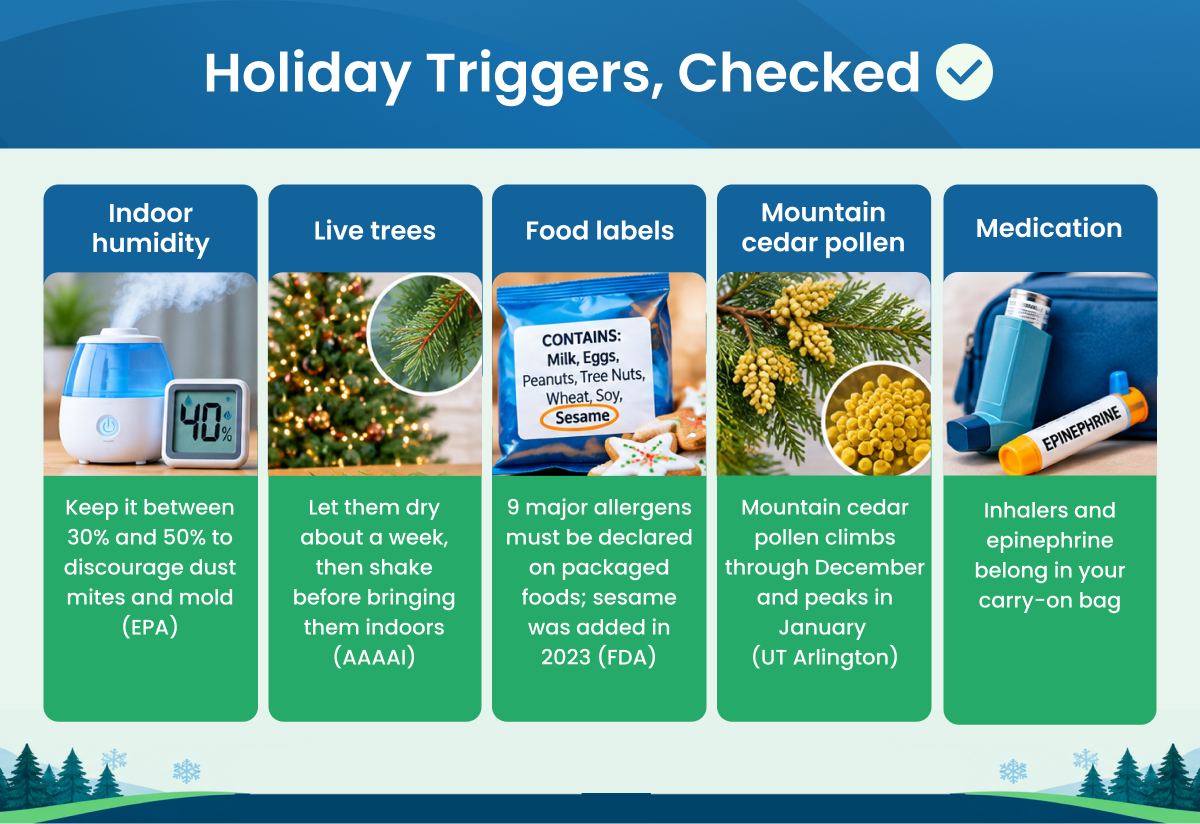
- Keeping indoor humidity between 30% and 50% limits dust mites and mold growth, per
EPA guidance.
- For holiday meals, ask about ingredients early. The FDA requires packaged food labels to declare nine major allergens.
- Pack controller inhalers and epinephrine in your carry-on bag so you can keep them with you.
Introduction
The best
allergy and asthma tips for the holidays have less to do with the weather outside and more to do with what comes into your house in December. Decorations, houseguests, visiting pets, fireplace smoke, and unfamiliar food all arrive in the same four weeks. Each one is manageable once you know which ones affect you.
We are an allergy and asthma clinic on Alamo Ranch Parkway, and our December questions differ from those we get the rest of the year. This guide covers the triggers our patients encounter most often, plus the practical
holiday allergy prevention steps we talk through in the exam room.
Allergy and Asthma Tips for the Holidays: Watch Out for Common Triggers
Holiday symptoms usually come from four sources: indoor allergens stirred up by decorating, respiratory viruses circulating at gatherings, cold, dry air, and food someone else serves. Mountain cedar pollen adds a fifth source for anyone living in South Central Texas.
These are the ones we watch for most in November and December:
- Dust mites and mold released from boxes, bins, and attic storage.
- Pet dander at a relative's house, especially in guest bedrooms where cats sleep.
- Respiratory infections. The CDC notes that flu, COVID-19, and RSV can be
more serious for people with asthma and can lead to pneumonia or an asthma attack.
- Wood smoke. Fine particles from fireplaces and wood stoves can
trigger asthma attacks, according to the EPA.
- Mountain cedar pollen, which climbs through December and peaks in January in Texas.
If you have never pinned down which of these affects you, our guide to the
top allergy triggers in San Antonio is a reasonable place to start.
Patients often tell us they assumed the holidays were making them tired. Fatigue is a common
seasonal allergy symptom and responds to treatment.
Be Careful With Holiday Decorations
We say this more than anything else in December: people blame the tree, but the storage boxes are usually the bigger problem. Real trees do carry mold spores and pollen on their branches. The plastic tree that spent 11 months in a humid garage also carries dust and mold.
The AAAAI advises that if you want a real tree,
dry it in a garage or on a covered porch for about a week, then shake it out before bringing it indoors.
One more note on storage. Attics and garages in this part of Texas swing between humid and dry conditions, and that cycle supports mold growth.
Sealed plastic bins cost a few dollars each and do more for next December than any air purifier we could recommend. Our post on
winter allergy tips covers the indoor side of this in more detail.
Make Your Home Allergy-Friendly for Guests
If you are hosting, a little preparation makes the house more welcoming for everyone who walks in. These are the
holiday allergy tips we give patients who host large family gatherings.
- Run the HVAC system with a clean filter, and change it before guests arrive.
- Keep relative humidity between 30% and 50%, as recommended by the EPA, to discourage dust mites and mold.
- Vacuum guest rooms and wash bedding in hot water a day ahead.
- Keep pets out of the room where a guest with a pet allergy will sleep.
- Ask guests in advance whether anyone has asthma or a food allergy so nothing surprises anyone at the table.
Knowing which triggers are yours makes the rest of this list much shorter. Together, at Premier Texas, we will review your triggers and build a plan that fits your December schedule.
Manage Food Allergies During Holiday Meals
Holiday food allergy safety comes down to knowing ingredients before the plate is in front of you.
The FDA requires nine major food allergens to be declared on packaged food labels: milk, eggs, fish, crustacean shellfish, tree nuts, peanuts, wheat, soybeans, and
sesame. The FDA added sesame as the ninth in 2023.
Homemade dishes carry no label, which is where holiday meals get complicated.
What we suggest to families managing food allergies in December:
- Inform the host about your food restrictions as soon as you accept the invitation.
- Ask what went into each dish, including the oil used and whether serving spoons were shared.
- Bring one safe dish you know, so there is always something on the table.
- Serve the person with the allergy first, before utensils move between bowls.
- Keep epinephrine on the person throughout the meal.
In our experience, the thing that most often derails a careful plan is the dish a cousin brings at the last minute with no idea what is in it. Stuffing, pie crusts, and eggnog hide more allergens than one would expect. Our post on
hidden food allergens goes deeper into the ingredients that surprise people.
Protect Yourself From Cold Weather and Asthma Triggers
Cold, dry air is a well-recognized
asthma trigger, and the NHLBI lists it among
common triggers. San Antonio cold fronts are short, so they catch people off guard. A 38-degree morning after a 70-degree week can tighten airways on a walk to the car.
Steps that help during a cold snap:
- Breathe through your nose, or cover your mouth and nose with a scarf outdoors.
- Warm up indoors before outdoor exercise, and keep rescue medication with you.
- Watch for smoke from fireplaces and fire pits at outdoor gatherings.
- Stay up to date on the flu and other recommended vaccines, as advised by the CDC for people with asthma.
If coughing at night or shortness of breath on cold mornings is new for you, read through our overview of
asthma symptoms and bring that list to your next visit.
Among the
holiday asthma triggers we see, a dropped controller routine during a busy month is the most common and easiest to fix.
Travel Safely During the Holidays
Travel plans and medication routines compete for attention, and medication usually loses. Patients tell us they packed their rescue inhaler but left their controller inhaler on the bathroom counter. By day four of a trip, that gap shows up.
A short packing routine solves most of it:
- Carry all inhalers, epinephrine auto-injectors, and antihistamines in your carry-on bag.
- Keep medication in its original labeled packaging. TSA allows
medically necessary liquids and medications in reasonable quantities, and you can declare them at the checkpoint.
- Pack a written copy of your action plan and your prescriptions.
- Bring your own pillowcase if dust mites affect you.
- Ask about pets in advance if you are staying in someone's home.
Be Prepared for Holiday Gatherings
A written asthma action plan is the single most useful thing you can carry into a crowded house. The NHLBI describes an
asthma action plan as a written plan from your provider that outlines daily medications, what to do when symptoms change, and when to seek emergency care.
Before a gathering, we suggest you check three things:
- Your rescue inhaler has doses left and has not expired.
- Your epinephrine auto-injectors are current and with you.
- One other adult at the gathering knows where your medication is and how to use it.
Dates matter here. Expired devices are common in December because people refill them during allergy season and then forget about them by the time the holidays arrive.
Book a doctor’s appointment before you travel, or call (210) 764-6567. A short visit now is easier than a refill request from out of town.
When to Seek Medical Care
Talk with your provider if symptoms interrupt sleep, you need rescue medication more often than usual, or symptoms aren't responding as they normally do. Seek emergency care for severe breathing difficulty or signs of a serious allergic reaction after eating.
For longer-term control, immunotherapy addresses the underlying sensitivity rather than the daily symptoms. We offer both
allergy drops
and
allergy shots, and your allergist can discuss which approach best suits your triggers and schedule.
Immunotherapy has a real limitation worth stating. It builds slowly over months. Starting in late November will not change how you feel this December, and we tell patients that directly. What can change next winter is the part of
holiday allergy management that gets postponed every year.
Now, here's what we didn't mention earlier. The patients we see in early January often felt fine until about December 26. By then, cedar pollen is climbing, the decorations have been up for a month, and the controller routine has slipped. That is the reason this post runs in November.
Stay Strong These Winters with Premier Allergy Texas
Pick the two or three items on this list that match your own triggers and handle those before the decorations come down from the attic. If you are not sure which triggers are yours, test the answers.
Frequently Asked Questions
Can a real Christmas tree trigger allergy or asthma symptoms?
An allergy to the tree species itself is uncommon. Symptoms more often come from mold spores, pollen, and dust carried on the branches. The AAAAI suggests letting a live tree dry in a garage or on a covered porch for about a week, then shaking it out before bringing it inside.
Why do my allergies get worse in December in San Antonio?
Two things overlap. Indoor allergens increase as homes close up and people bring out decorations from storage, and mountain cedar pollen rises through December, peaking in Texas in January. Many people assume winter means an allergy break here, so symptoms feel unexpected when they arrive.
Can cold weather trigger asthma symptoms?
Yes. The NHLBI lists cold, dry air as a common asthma trigger because breathing it can dry out and narrow the airways. Even short San Antonio cold fronts can trigger symptoms. Covering your nose and mouth outdoors and warming up indoors before exercise can reduce the effect.
How should I handle food allergies at someone else's holiday dinner?
Tell the host when you accept the invitation so they have planning time. Ask about ingredients and shared utensils, bring a dish you know is safe, and serve the person with the allergy first. Keep epinephrine on you throughout the event.
Should I keep up allergy shots or drops during the holidays?
Talk with our allergists before making any changes. Immunotherapy depends on consistent timing, and holiday travel is the most common reason patients miss doses. If you let us know in advance, our team can often adjust your schedule around travel dates, rather than after a gap has occurred.
This article is for general education and is not medical advice. Talk with your provider or allergist about your symptoms, your medications, and what is right for you.