It's a warm afternoon, and you cut yourself a slice of watermelon. One bite in, your throat starts itching, and your tongue feels like it's tingling. Which is strange, because you've never been allergic to watermelon.
What you're probably dealing with is Oral Allergy Syndrome.
What Is Oral Allergy Syndrome?
Oral Allergy Syndrome (OAS), also called pollen food allergy syndrome, happens because certain proteins in raw fruits, vegetables, and nuts look structurally similar to proteins found in pollen. Your immune system, already primed to fight that pollen, mistakes the food protein for the real thing.
The result is a localized reaction: itching or tingling in your mouth and throat that starts almost immediately after eating. Your body isn't objecting to the watermelon itself. It thinks it just encountered ragweed pollen.
Ragweed allergy works on the same mechanism. Your immune system identifies ragweed pollen as a threat and mounts a response, producing the hay fever symptoms most people recognize: itchy eyes, runny nose, and persistent sneezing.
Timing matters here. Ragweed pollen season generally begins in August, peaks around mid-September, and continues until the first hard frost, typically in October or November. That's why OAS symptoms often intensify in late summer and fall, though they can appear at other times depending on your specific triggers and where you live.
Why Ragweed Allergies Can Cause Food Reactions
Ragweed is a soft-stemmed weed that grows across most of the United States, and it's especially widespread in the Eastern and Midwestern states. Warm, dry, breezy conditions are ideal for releasing pollen into the air, and because ragweed pollen is so light, it can travel long distances on the wind. That's part of why the season feels like it stretches on.
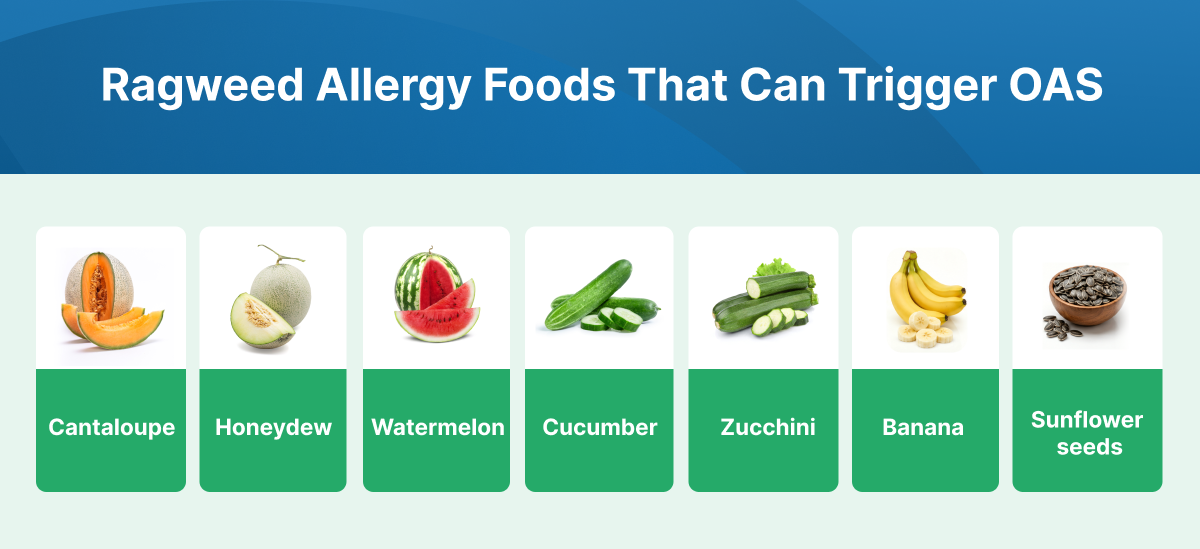
These pollen grains share protein structures with certain fruits and vegetables, particularly melons, cucumbers, zucchini, and bananas. So when someone with a ragweed allergy eats a banana, their immune system responds as though it just met ragweed pollen, producing the itchy throat and tingling mouth that define OAS.
Managing ragweed allergy alongside OAS and asthma at the same time takes some planning, especially during peak season.
Common Trigger Foods
According to the
American College of Allergy, Asthma & Immunology, the foods most commonly linked to ragweed cross-reactivity are:
- Cantaloupe
- Honeydew
- Watermelon
- Cucumber
- Zucchini
- Banana
- Sunflower seeds
Reacting to one food in this group doesn't mean you'll react to all of them, and triggers vary quite a bit from person to person.
Cooking often helps, because the proteins responsible for most of these reactions break down under heat. That's why someone who reacts to raw cucumber may have no trouble with a cooked version. It isn't universal, though. Some cross-reactive proteins are heat-stable, so talk with your allergist before testing cooked versions of a food that has caused you problems.
Symptoms of Oral Allergy Syndrome
OAS symptoms appear almost immediately after eating a trigger food. The most common ones are:
- Itching, tingling, or mild swelling of the lips, mouth, tongue, or throat
- Bumps on the lips or in the mouth
- Itchy ears
Less commonly, symptoms can appear elsewhere:
- Nausea
- Itching, redness, or swelling of the skin after handling certain raw foods
Symptoms usually fade quickly once the food is swallowed or removed from your mouth, and they typically stay confined to the mouth and throat.
When It's More Than OAS
Severe reactions are rare with OAS, but they aren't impossible. Anaphylaxis is a whole-body allergic reaction involving multiple systems at once, and it's a medical emergency. Signs include:
- Difficulty breathing, wheezing, or throat tightening
- Swelling of the tongue or throat that makes swallowing hard
- Widespread hives or flushing
- Dizziness, fainting, or a sudden drop in blood pressure
- Vomiting or abdominal cramping alongside any of the above
If you experience these, use epinephrine if you have it and call 911. Don't wait to see whether symptoms improve on their own. If you've had a reaction that went beyond your mouth and throat, talk with your allergist about whether you should carry an epinephrine auto-injector.
Diagnosis and Allergy Testing
An allergist will start by reviewing your symptoms and history, then confirm the diagnosis with one or more of the following, depending on what those initial findings suggest:
- Allergy skin tests
- Allergy blood tests
- Food challenge tests
When to See an Allergist
Ideally, check in with your allergist ahead of each allergy season for a routine visit and a medication review.
If you're noticing mouth itching or throat tingling after eating certain foods, don't wait it out. In the meantime, avoid the foods you suspect are causing the reaction.
Treatment Options
OAS is generally manageable. For most people, avoiding trigger foods in their raw form, or eating them cooked, handles it. For anyone with a history of more severe reactions, epinephrine may be part of the plan.
Longer term, treatments that address the underlying pollen allergy, such as allergy shots or allergy drops, may help reduce sensitivity over time. Talk with your allergist before starting any new medication or treatment plan.
What This Means for You
Oral Allergy Syndrome is usually more annoying than dangerous. Most people manage it with some adjustments to how they prepare certain foods and, when needed, medication.
Still, it's worth knowing precisely which foods affect you and whether any of them carry a risk of a more serious reaction. That's not something to figure out through trial and error at your kitchen table.
Schedule an appointment with Premier Allergy TX to get tested and find out exactly what you're working with.
Frequently Asked Questions
Is Oral Allergy Syndrome the same as a food allergy?
Not quite. A food allergy
is a direct immune reaction to the food itself. OAS is a case of mistaken identity: your immune system reacts to fruits or vegetables because their proteins resemble pollen proteins it's already primed to fight. That's why OAS symptoms are usually milder and confined to the mouth and throat, though it's still worth taking seriously.
Will I always react to the same foods, or can that change?
It can shift. Because OAS is tied to pollen sensitivities, your triggers can change as those sensitivities change, and reactions often vary in intensity from season to season. Many people notice stronger symptoms during peak ragweed season.
Can I still eat these foods if I cook them first?
Often, yes. Heat breaks down most of the proteins responsible for cross-reactions, so cooked versions of foods like cucumber or melon are often well tolerated even when raw versions aren't. Some proteins are heat-stable, though, so check with your allergist before testing this on your own.
Do I need to carry an epinephrine auto-injector if I have OAS?
Not necessarily. Most OAS reactions stay mild and limited to the mouth and throat. If you've ever had symptoms that spread beyond that, or you have other risk factors, your allergist can assess whether carrying one makes sense for you.